I spoke with a family this morning whose little girl had been sleeping beautifully after we worked together a few months ago.
Then one difficult night gradually shifted the direction they were heading.
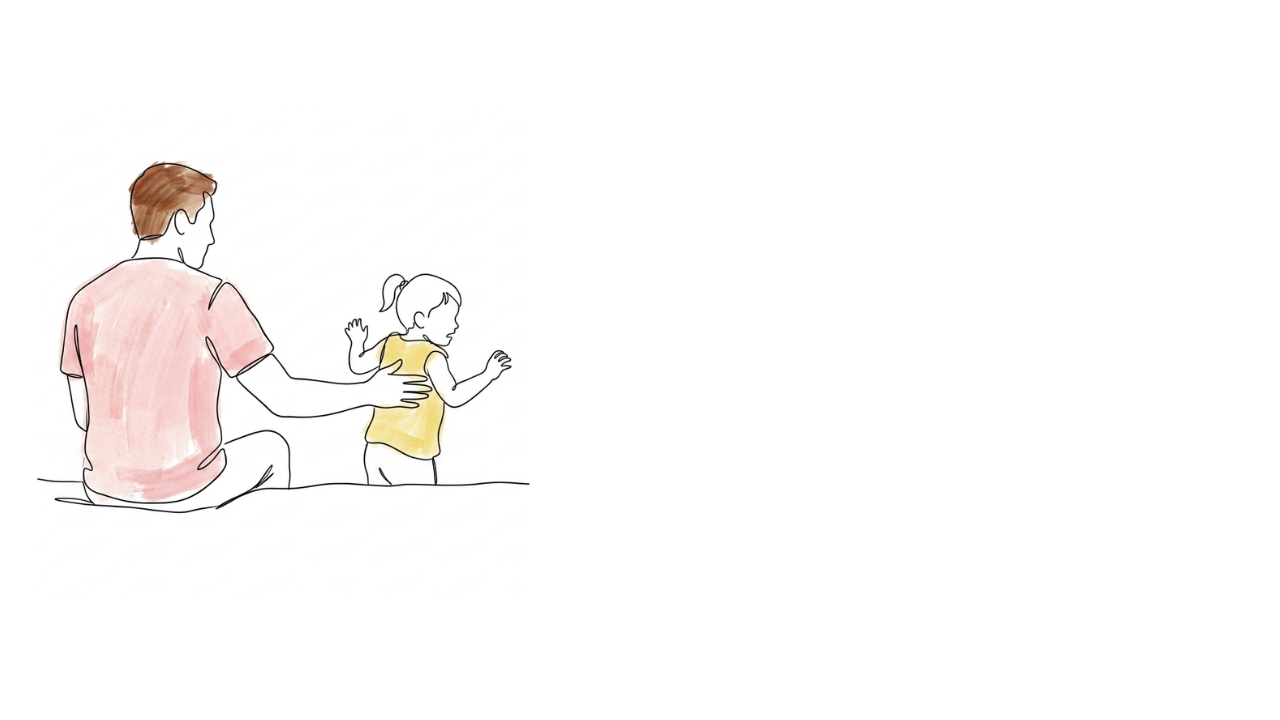
She needed a little extra comfort, so Dad picked her up and she fell asleep in his arms. There was absolutely nothing wrong with that moment. Sometimes our children genuinely need us a little more, and responding with love isn't the problem.
The challenge wasn't what happened that night.
It was what happened afterward.
Once she experienced the comfort of falling asleep in Dad's arms, it naturally became something she wanted again. Before long, her parents were sleeping on a mattress beside her bed every night. She started waking several times just to check they were still there, became increasingly sensitive to every little noise, and early morning waking returned. Everyone was exhausted.
As we talked, I realized we weren't really talking about sleep anymore.
We were talking about positions. That one shift changed the entire conversation.
One of the most helpful shifts for this family was understanding that children and parents naturally occupy different positions within the relationship.
Children naturally occupy the Child Position. They become overwhelmed. They struggle with frustration. They act impulsively. They depend on us to remain steady when they cannot.
Parents are called to occupy the Parent Position. We are called to remain calm enough to lead, to tolerate discomfort, to guide with clarity, and to stay steady even when our child is not.
Occupying the Parent Position means we are sometimes called to sit with our child's discomfort rather than immediately relieving it. That doesn't mean we never comfort our children.It doesn't mean we ignore their emotions. It means we comfort them from the Parent Position rather than joining them in the Child Position.
As we explored what had happened, it became clear that her daughter's tears weren't the problem we needed to solve. Her protests at bedtime weren't the problem either.
The real question became:
Could her parents remain in the Parent Position while their daughter was responding from the Child Position?
Instead of asking, "How do we make her stop crying?" their focus became, "How do we remain the Source of Stability while she cries?"
Instead of lying beside her all night because they couldn't tolerate her discomfort, they began preparing themselves to tolerate it. They stopped looking for the perfect strategy that would prevent tears and started asking, "Who do we want to be in this moment?"
Their daughter's role wasn't to be calm.
Their role was.
When our child cries, it's so easy to assume something must be wrong. Maybe she's frightened? Maybe she isn't tired? Maybe the room is too noisy? Maybe we're doing something wrong? Sometimes those questions are important.
But sometimes we're simply witnessing a two-and-a-half-year-old responding exactly as a two-and-a-half-year-old is meant to respond.
The goal isn't to stop our child from acting like a child.
The goal is to remain in the Parent Position while our child remains in the Child Position. Ironically, it's often when children no longer need us to remove their discomfort that they begin to feel safe enough to move through it.
That's where leadership begins. That's where security grows. And over time, that's often where better sleep returns.
If this way of thinking resonates with you, I’d love to invite you to join my next Parent Leadership Challenge this October. Keep an eye on your inbox—I’ll be sharing more details soon.
Together, we'll explore what it really means to become the Source of Stability—not only at bedtime, but in every challenging parenting moment.
When children are free to remain in the Child Position, and parents are willing to remain in the Parent Position, something remarkable happens. The relationship becomes steadier. Children feel safer. And often, sleep begins to follow.
Want more pearls of wisdom?
Subscribe to our blog for more weekly content that will strengthen your parenting.
By subscribing, you will automatically be added to Dorit Shoshani’s email list, where you will receive free weekly content. We respect your privacy and do not send spam. You can unsubscribe at any time.