There are certain phases in early parenthood that can feel especially confusing. You look at your baby and know that something isn’t quite right, but no one seems to have a clear answer.
This week, I spoke with several families with very young babies—around three to four months old. Each of them described something similar: a baby who seemed deeply uncomfortable in their body. Gassy, fussy, sometimes arching their back, waking frequently at night, and becoming more tense as the day went on. Some of these babies were inconsolable at times, crying for long stretches, unable to fully settle, as if something inside just wouldn’t let them rest.
Naturally, parents assume something physical must be wrong. They go to the pediatrician, to an osteopath, to a physical therapist. They search for answers, hoping someone will identify the cause and offer relief. But more often than not, they’re told that everything looks fine, that their baby will grow out of it, and that they simply need to wait it out.
And so they go home with baby—still uncomfortable, still unsettled, still struggling to sleep, and without a clear way forward.
Over time, the strain begins to build. The days feel long and heavy. Nights are broken. At the same time, mom is often still recovering from birth herself, and the ongoing lack of rest can quietly deepen feelings of overwhelm, and at times, intensify postpartum struggles. Baby becomes more dependent, harder to soothe, and more reactive. The entire home begins to feel the tension. What was meant to be a joyful new beginning can start to ripple through the couplehood as well—when both parents are doing their best, yet still feel unsure how to support their baby. By the time parents reach out to me, they are often exhausted on every level, carrying a quiet sense of desperation and confusion.
What I often see, sometimes even from just a short video, is something that hasn’t yet been named: a loop. A cycle that is easy to miss when you’re inside of it.
A baby becomes overtired, and that overtiredness begins to show up in the body. It can look like restlessness, digestive discomfort, tension, difficulty settling, frequent waking. The more tired the baby becomes, the more dysregulated their system feels, and the harder it becomes for them to rest. What looks like a digestive issue or a sensitivity is often deeply connected to one very basic and very non-negotiable need: sleep.
As adults, we understand this instinctively. After a poor night of sleep, everything feels harder. Our patience is thinner, our bodies feel off, our appetite shifts, our ability to think clearly is affected. And then, after a good night of sleep, there is a return to baseline. A calm that moves through the body almost without effort.
For babies—especially sensitive babies—this regulation is even more essential. Sleep is not simply rest. It is what allows the entire nervous system to settle, and when sleep is lacking, the effects ripple through everything. The fussiness, the crying, the physical discomfort, the intensity we see during the day are often not the problem itself, but a signal.
When we begin to look at things this way, the question gently shifts. Instead of asking what is wrong with my baby, we begin to ask, "What might my baby need right now?"
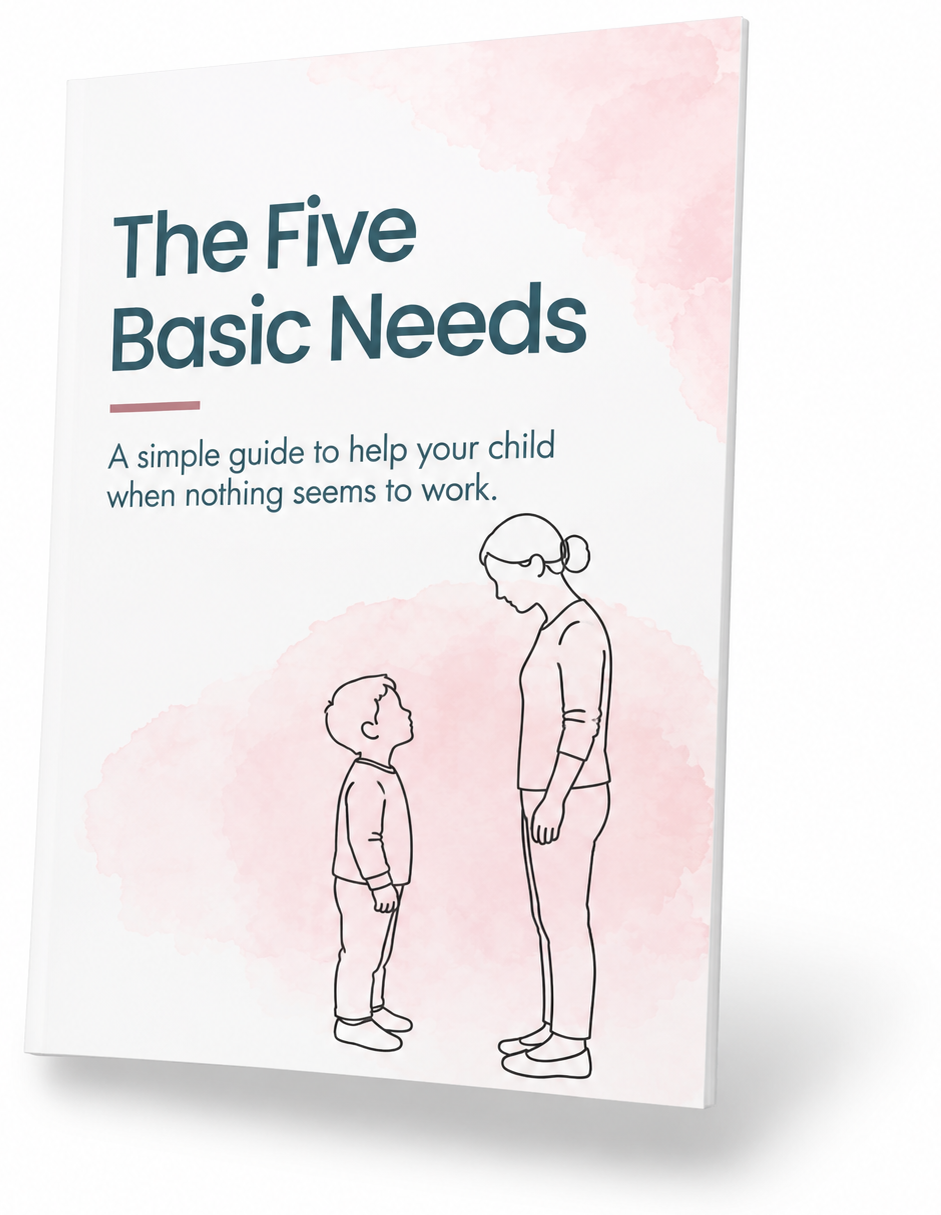
Babies and small children (and even older children) don’t yet know how to meet their own needs. This is our job as the parent in the lead. This is where we come in. Our role is to recognize the signals, to understand what we are seeing, and to know where to place our focus. Sometimes the need is sleep. Sometimes it is love, or movement. Sometimes the day has been too unpredictable, and the body is asking for rhythm and structure.
And when those needs are met consistently, something very clear begins to emerge—a sense of calm washes over them. Baby becomes more comfortable and content in his body, more settled, more able to play and simply be. Not because his personality has changed, but because his system is no longer overwhelmed.
This is also where your most reliable feedback lives. Not in outside opinions, not in social media, and not even in professional advice alone. It lives in your home, in your child, in the overall feeling of your family system. When needs are met, there is more ease, more flow, more steadiness. And when there is ongoing irritability or chaos—whether subtle or intense—it is not random. It is information. A signal that something needs attention.
So if you are finding yourself in that place—where your baby seems inconsolable, where the crying feels constant, where the days are heavy and the nights feel endless—know that there is a reason behind what you are seeing. And there is a way forward.
Not through guessing or trying everything at once, but through understanding. Through learning how to read your child’s signals and knowing where to place your focus so that their needs are truly being met.
A “needy” baby is not a personality trait. It is communication.
And when you begin to understand that communication, you step into a different role—one where you are no longer reacting, but leading, with clarity and confidence.
If you feel like you’re in this loop and can’t quite see your way out of it, this is exactly the kind of situation I support families through. Sometimes it takes a trained eye to see what’s really happening and to create a clear, gentle path forward. You don’t have to figure it out alone. If you’re looking to understand this more deeply, I’ll be walking through these patterns and how to begin shifting them step by step in my upcoming 4-day challenge. You’re very welcome to join me there.
Want more pearls of wisdom?
Subscribe to our blog for more weekly content that will strengthen your parenting.
By subscribing, you will automatically be added to Dorit Shoshani’s email list, where you will receive free weekly content. We respect your privacy and do not send spam. You can unsubscribe at any time.